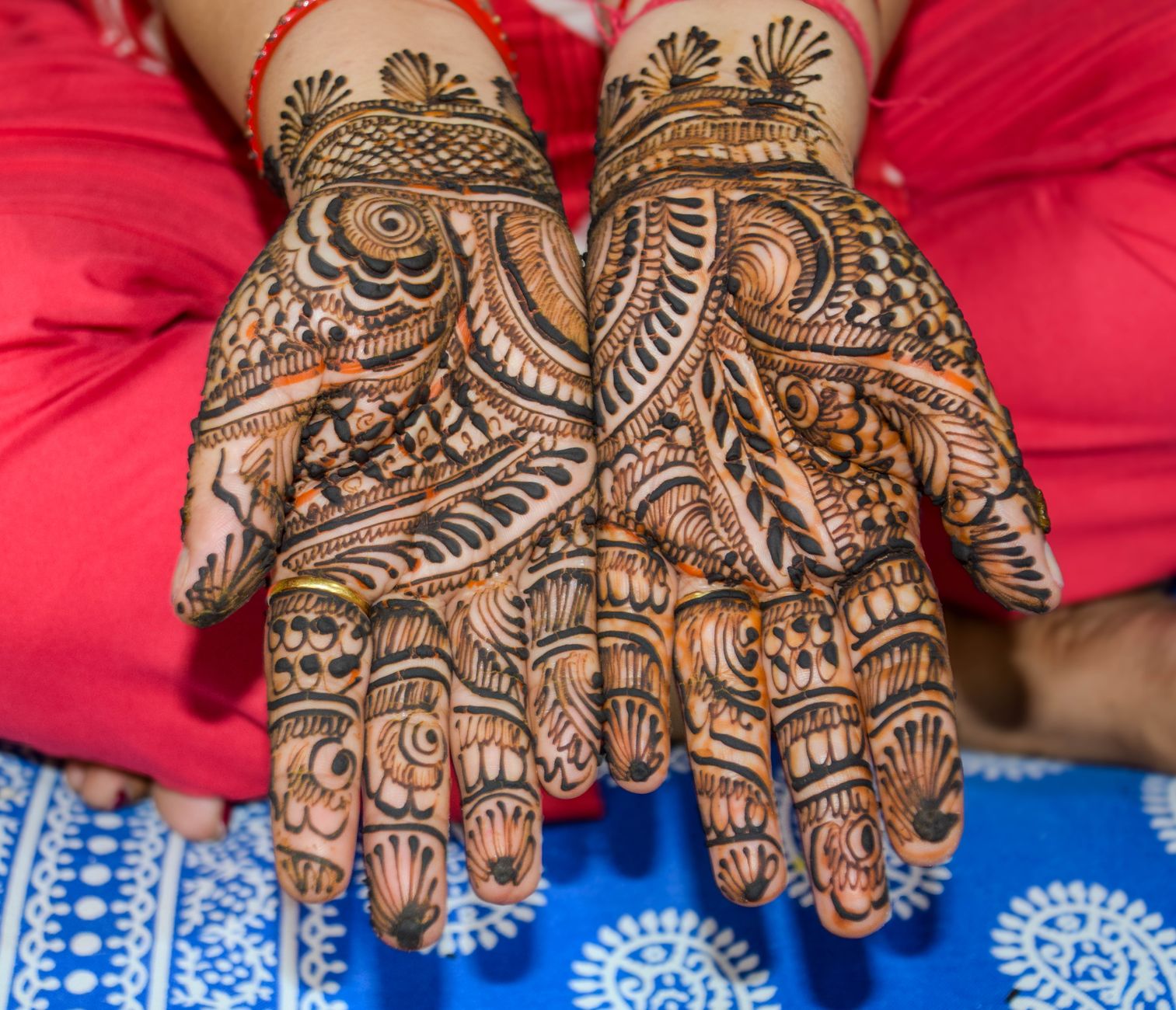
The kına gecesi is the evening before the wedding, and at a German-Turkish or Gulf celebration it is frequently the part guests remember longest, provided somebody explains what is happening.
What it is
A gathering, traditionally of the bride's side, on the eve of the wedding. Historically it marked the bride leaving her family's household, which is why the tone is not straightforwardly celebratory: there is a deliberate moment of sadness in the middle of it, and that surprises guests who came expecting a party.
It is a party. It also has a lump in its throat, and that is the point.
The order of the evening
Arrival and food. Informal, often a buffet, often outdoors. An hour or so of people greeting each other.
The bride enters, veiled in red. The kırmızı duvak, a red veil covering the face entirely. She is led in by relatives, usually accompanied by candles or sparklers, and seated on a chair at the centre.
The music changes. A specific kind of slow, mournful song is played. Anyone in the room who has been to one of these before knows exactly which song, and they start crying at the first line. Guests who have not will look confused. This is where a short explanation beforehand pays for itself.
The henna. A bowl of henna paste, decorated with candles, is carried around the room. Female relatives take turns. The bride keeps her hand closed.
The coin. The mother-in-law (or another senior woman) places a gold coin in the bride's palm to persuade her to open her hand. There is usually good-natured negotiation about this. It is a small piece of theatre and everybody enjoys it.
The henna is applied to the bride's palm, then wrapped in cloth or a small red glove and left overnight.
The groom's turn, in many modern versions: a small dot on his little finger, considerably less ceremony, considerably more laughter.
Then dancing, and the tone flips completely. Halay, davul and zurna if there is a live band, and it usually runs later than the wedding does.
What guests should know beforehand
Four things, and they take ninety seconds to say:
- The red veil means the bride is not yet given away.
- The sad song is meant to be sad. It is about leaving home.
- The coin is a bribe to open her hand and it is meant to be funny.
- When the dancing starts, join in. Nobody expects you to know the steps.
At Lena and Mert's wedding in Belek we ran that explanation in German before the bride came in, and it changed the evening: guests were participants rather than spectators.
What to wear
Guests: smart but not black tie, and not the wedding outfit. Many brides wear a bindallı (a traditional embroidered velvet caftan, usually red or purple) rather than white.
Where it happens
Best at a property that can host it and the wedding without moving anyone. Belek does this better than anywhere: henna night on the Friday in a garden or side venue, ceremony on the Saturday, brunch on the Sunday.
For non-Turkish couples
You can absolutely have one, and couples with no Turkish connection increasingly do. Two honest notes:
Do it properly or not at all. A henna night with a bowl of paste and no ceremony is a themed party. With the music, the veil, the coin and someone who knows the order, it is something else.
Have someone explain it. Otherwise it becomes a performance your guests watch rather than an evening they are part of, and the difference is entirely in the briefing.
Other Turkish traditions worth borrowing and the multi-day package that most henna weekends sit inside.